Customers demand instant, personalized support across platforms like WhatsApp, Instagram, and email - and in their native language. Here's why multilingual AI is the solution:
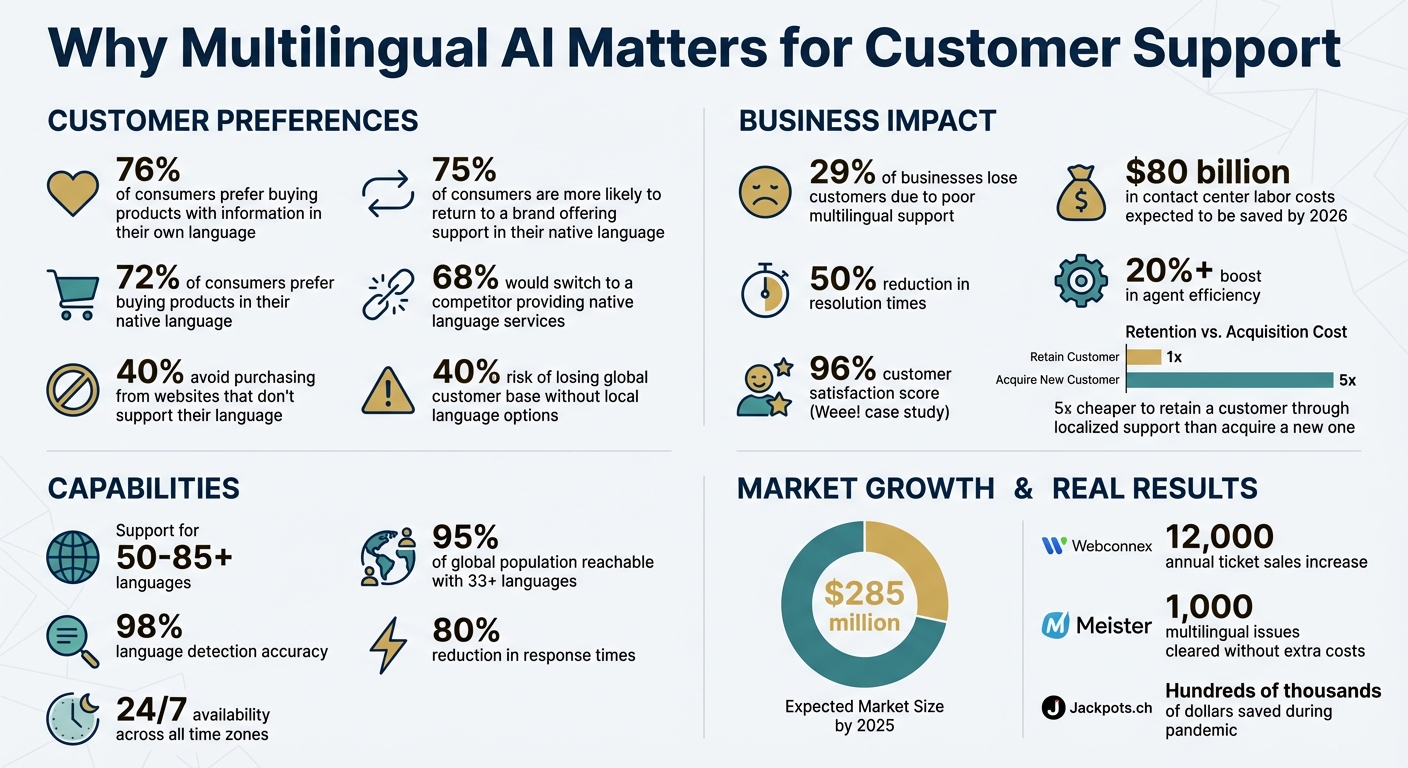
- 76% of consumers prefer buying products with information in their own language.
- 29% of businesses lose customers due to poor multilingual support.
- Multilingual AI provides instant, native-level responses in 50+ languages, automatically detects language, retains context, and works 24/7.
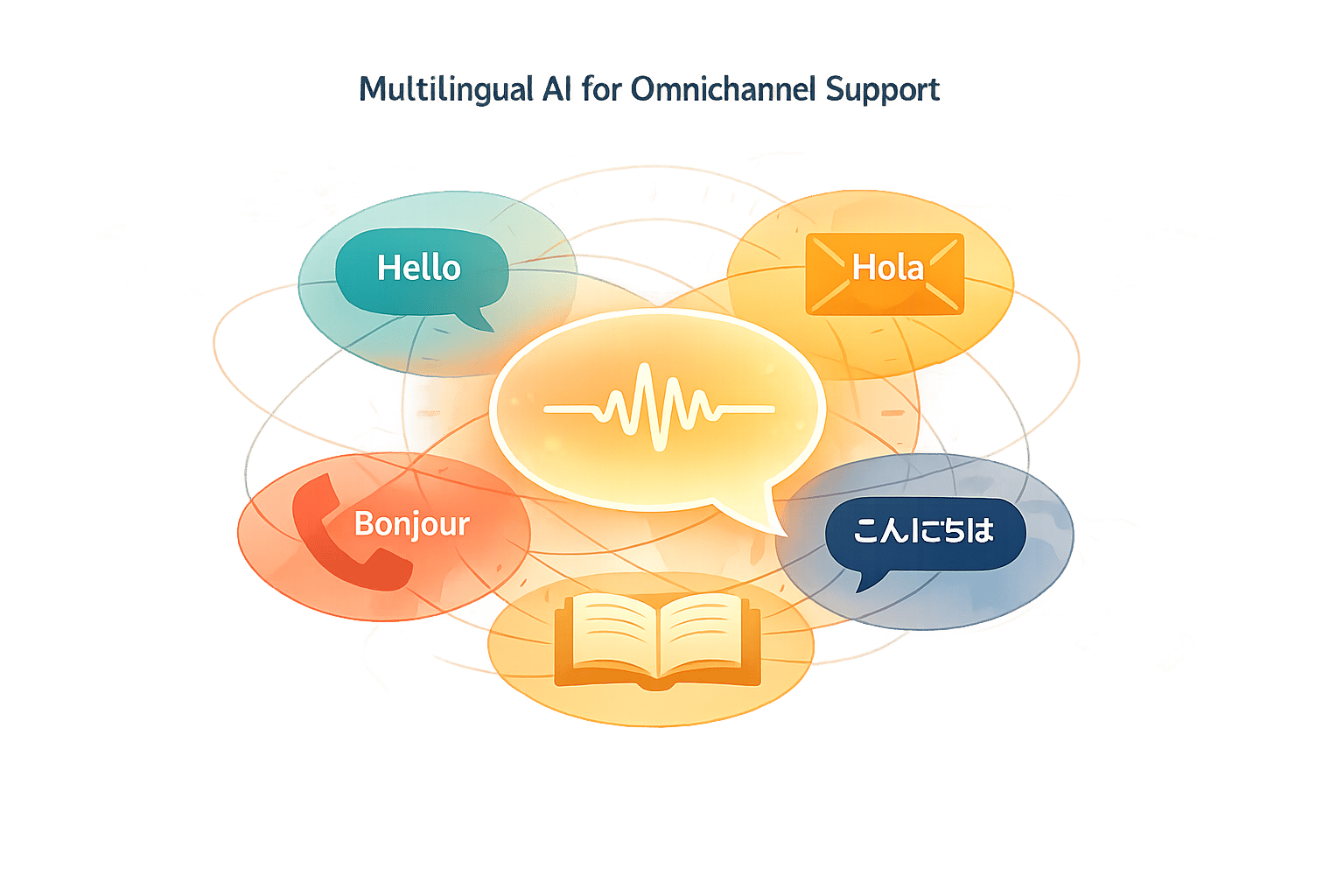
This technology ensures smooth communication across platforms, like websites and social media, while preserving your brand's tone and adapting to local preferences (e.g., date formats, currency). Businesses using multilingual AI report faster resolutions, higher satisfaction rates, and significant cost savings.
Multilingual AI is transforming customer service by breaking language barriers and unifying communication channels. Whether you're a global business or scaling up, it’s a game-changer for customer experience and efficiency.
Multilingual AI Customer Support Statistics and Benefits
What is Multilingual AI for Omnichannel Support?
Multilingual AI uses advanced language models (like GPT-4) to enable conversational agents to communicate in 33 to 85+ languages. These systems go beyond basic language translation by understanding context, idiomatic expressions, and regional nuances [1][4][6]. Unlike older customer support systems that require users to select a language manually, modern multilingual AI can detect the user’s language automatically from the first interaction. It even supports switching languages mid-conversation without missing a beat [1][4][5].
Here’s where it stands out: it’s not just about translation - it’s about localization. Traditional systems often rely on direct translations, which can feel stiff or miss cultural subtleties. Multilingual AI, however, adapts to specifics like U.S. date formats (MM/DD/YYYY), currency symbols (e.g., $), and even the formality or informality of language (such as German pronouns). It also picks up on regional slang to make the experience feel natural [1][4]. By using a single agent architecture, businesses can manage all content and logic in one place, eliminating the need to develop separate bots for different languages or regions [5][6].
"The true test of an intelligent chatbot isn't how well it speaks English - it's how well it understands humans in any language." - Heather Shoemaker, CEO, Language IO [6]
What Multilingual AI Can Do
With support for 33+ languages, these systems can connect with approximately 95% of the global population [1]. Whether a customer is in Tokyo, São Paulo, or Berlin, they’ll receive the same high-quality service. The AI is designed to maintain conversational memory, even when users switch topics or languages mid-conversation, all while preserving your brand’s unique tone [6].
It doesn’t stop there. Multilingual AI adjusts its responses to match local preferences - whether it’s currency, formality, or regional slang - ensuring your brand’s voice remains consistent across languages. Businesses can also use custom glossaries and brand-specific lexicons to ensure product names, slogans, and technical terms are translated accurately, maintaining the company’s identity no matter the market [6][1]. These capabilities make it an ideal fit for omnichannel environments.
How Omnichannel Integration Works
Omnichannel integration allows multilingual AI to work seamlessly across platforms like websites, Instagram, Facebook, WhatsApp, Telegram, and Slack [4][7]. It centralizes customer interactions into a single global inbox, so a customer can start a conversation on WhatsApp, continue it on your website, and follow up on Instagram - without losing any context or having to repeat themselves.
This system also gathers data from all channels to identify trends, recurring issues, and areas where workflows can improve. For complex multilingual queries that require human input, the integration ensures a smooth handoff by providing agents with the full translated conversation and context. By eliminating time zone barriers and reducing the need for round-the-clock staffing, businesses can deliver instant, native-language support at any time.
Benefits of Multilingual AI in Omnichannel Platforms
24/7 Global Support Without Human Agents
Time zones and staffing limitations become irrelevant with multilingual AI. Customers worldwide can get instant responses, whether it's dawn in Tokyo or midnight in Berlin. Studies reveal that 75% of consumers are more likely to return to a brand offering support in their native language, while 68% would switch to a competitor providing such services. Companies that fail to offer local language options risk losing up to 40% of their global customer base [9].
What’s more, AI-powered systems can handle thousands of conversations at once without compromising response quality - something no human team could achieve. This constant availability doesn’t just enhance customer satisfaction; it also leads to major cost reductions.
Cost-Effective Scaling
Implementing multilingual AI can significantly cut costs. In fact, conversational AI is expected to save companies $80 billion in contact center labor costs by 2026 [2]. Businesses have already seen impressive results: resolution times reduced by up to 50%, agent efficiency boosted by 20% or more, and millions saved in labor expenses.
Consistent Brand Voice Across Languages and Channels
Multilingual AI ensures your brand’s tone and personality remain intact across 85+ languages and various platforms. By learning from your existing materials - like website content, marketing campaigns, and support documents - the AI maintains consistency whether customers reach out via WhatsApp, Instagram, or your website.
The system uses custom glossaries and lexicons to translate technical terms, product names, and industry-specific jargon with precision. It also adapts to local preferences, such as using the formal "Sie" versus the informal "du" in German or applying U.S. date formats (MM/DD/YYYY). These adjustments ensure every interaction feels natural and localized.
"AI-generated translation will preserve the original speaker's voice, tone, and expression."
– Sundar Pichai, CEO, Google [6]
Additionally, a centralized multilingual knowledge base acts as the AI’s "brain." When product details or policies are updated, this information is automatically synced across all channels. The result? Customers always receive accurate, up-to-date information, no matter where or how they interact with your brand.
Features That Enable Omnichannel Integration
Real-Time Language Detection and Intent Recognition
Modern AI systems are now capable of instantly identifying the language a customer is using - right from their first message. Forget dropdown menus or manual selection; the AI can detect whether someone is typing in Spanish, Mandarin, Arabic, or any of over 100 languages, and respond in kind within seconds. Accuracy? We're talking up to 98% [14].
But it doesn't stop at language. Intent recognition takes things a step further by figuring out what the customer really wants. Using advanced Natural Language Understanding (NLU), these systems analyze everything from context to idioms, regional slang, and even typos to decode the true meaning of a query [6][13]. For example, if a German customer types "Ich brauche Hilfe mit meiner Bestellung", the AI understands that they're seeking help with an order and routes the conversation accordingly.
It doesn’t just stop at understanding words. The system can detect emotional tone, adjusting its responses or escalating the issue to a human if it senses frustration [12]. And if a customer switches languages mid-conversation - say, from English to French - the AI adapts in real time [12][10]. Companies using this technology report up to an 80% reduction in response times compared to traditional support systems [12], making omnichannel support faster and more responsive than ever.
Context Preservation Across Channels
Quick language detection and intent recognition are great, but keeping track of the conversation across multiple channels? That’s where things get impressive. Imagine a customer starts a chat on your website, then follows up later via WhatsApp. Without context preservation, they’d have to repeat their issue. Multilingual AI eliminates this frustration by remembering the entire conversation history - language preferences, past questions, pricing details, appointment times, and all [7][8].
This memory isn’t limited to one platform. It spans Instagram, Facebook Messenger, Telegram, Slack, and more. For instance, if someone asks about a product in Spanish on your website and follows up in French on WhatsApp, the AI keeps track of both the language change and the conversation flow [8][4].
In industries like finance or real estate, where precision is key, context preservation becomes even more critical. Advanced systems use dual-layer memory: one for the immediate conversation and another for long-term preferences [4]. This means the AI remembers if a customer prefers formal German ("Sie") over informal ("du") or that they use the MM/DD/YYYY date format.
When a human agent needs to step in, context preservation proves invaluable. If the AI hands off the conversation through tools like Freshchat or Zendesk, the agent can access the full multilingual chat history without asking the customer to repeat themselves [8][2]. This smooth transition not only saves time but also builds trust by ensuring consistent support across all channels.
Integration with Business Tools and CRMs
Seamless support also depends on how well the AI integrates with your existing business tools and CRMs. Multilingual AI can connect directly with platforms like Salesforce, Zendesk, Calendly, and automation tools like Zapier [8][1]. This ensures that every multilingual interaction is automatically synced with your workflows.
For example, if a customer books an appointment in Japanese, the AI not only schedules the event in the correct time zone but also sends a confirmation email in Japanese - no manual input required [8]. Similarly, a lead inquiry in Portuguese flows directly into your CRM, complete with language tags, so your sales team knows exactly how to follow up [8][1].
| Feature | Function in Omnichannel Support |
|---|---|
| Language Auto-Detection | Instantly identifies the input language and adjusts the bot's response language [11] |
| Dialogue Management | Keeps the conversation thread intact across topics and platforms [6] |
| Workflow Automation | Updates CRMs or sends notifications based on multilingual inquiries [1] |
| Native Translation | Lets human agents read and reply to foreign language chats directly in their usual workspace [2] |
ChatSpark takes this integration to the next level, working with Freshchat for human handoffs, Zapier for automating workflows, and Square Booking for managing appointments - all while supporting over 85 languages [8]. From the first message to the final booking, multilingual AI ensures smooth, efficient omnichannel support across the board.
How to Implement Multilingual AI for Omnichannel Support
Choosing the Right Multilingual AI Platform
When setting up multilingual AI, the choice of platform is crucial. Look for a system that supports 85+ languages, offers automatic real-time language switching, and integrates seamlessly across various channels like web, mobile, WhatsApp, and social media platforms [4]. A standout feature to prioritize is automatic language detection, which eliminates the need for dropdown menus and simplifies the user experience.
Start by piloting the system in your top 2-3 languages based on customer data [1][4]. This phased approach allows you to evaluate the system's accuracy and contextual fit without overwhelming your team. During this process, ensure the platform integrates with your essential business tools to confirm it's ready for full AI support implementation.
Training AI with Your Business Knowledge
Begin with a centralized, localized knowledge base tailored to reflect U.S. standards, such as date formats (MM/DD/YYYY) and currency ($) [1][16]. To maintain consistency across all languages, use a translation layer that works with your existing bot, rather than creating separate bots for each language [6].
"True multilingual agents handle idioms, context, culture, and regional expectations, making every user feel at home." – Alix Gallardo, Co-Founder, Invent [4]
Keep your language simple and sentences short to improve translation accuracy. While AI translation typically achieves 70% to 85% accuracy, adding human review can push this to 95% to 100% [3]. For specialized or sensitive content, incorporate a human-in-the-loop (HITL) review process to ensure translations align with your brand's tone and context.
Finally, validate your setup by thoroughly testing the AI across all supported languages and communication channels.
Testing and Optimizing AI Performance
Thorough testing is essential to ensure your multilingual AI performs consistently across all user interactions. Work with native speakers to identify issues like misspellings, regional slang, and mid-conversation language switches that automated testing might miss [1][4]. These nuances can significantly impact how natural and appropriate the AI feels to users.
Track performance metrics like resolution rates, customer satisfaction (CSAT), and escalation rates for each language individually [1][17]. Add real-time feedback tools, such as in-chat satisfaction surveys and "report translation issue" buttons, so users can flag problems as they arise [17]. Conduct quarterly audits with native speakers to ensure the AI maintains the right tone and formality - for instance, distinguishing between formal and informal address in languages like German [1][17].
Additionally, after any system updates, perform regression testing across all languages to confirm that new changes haven’t negatively affected performance. Continuously retrain your Natural Language Understanding (NLU) models using real-world interaction data to improve how the AI recognizes intent across diverse languages and dialects [17].
ChatSpark: Multilingual AI for Omnichannel Platforms
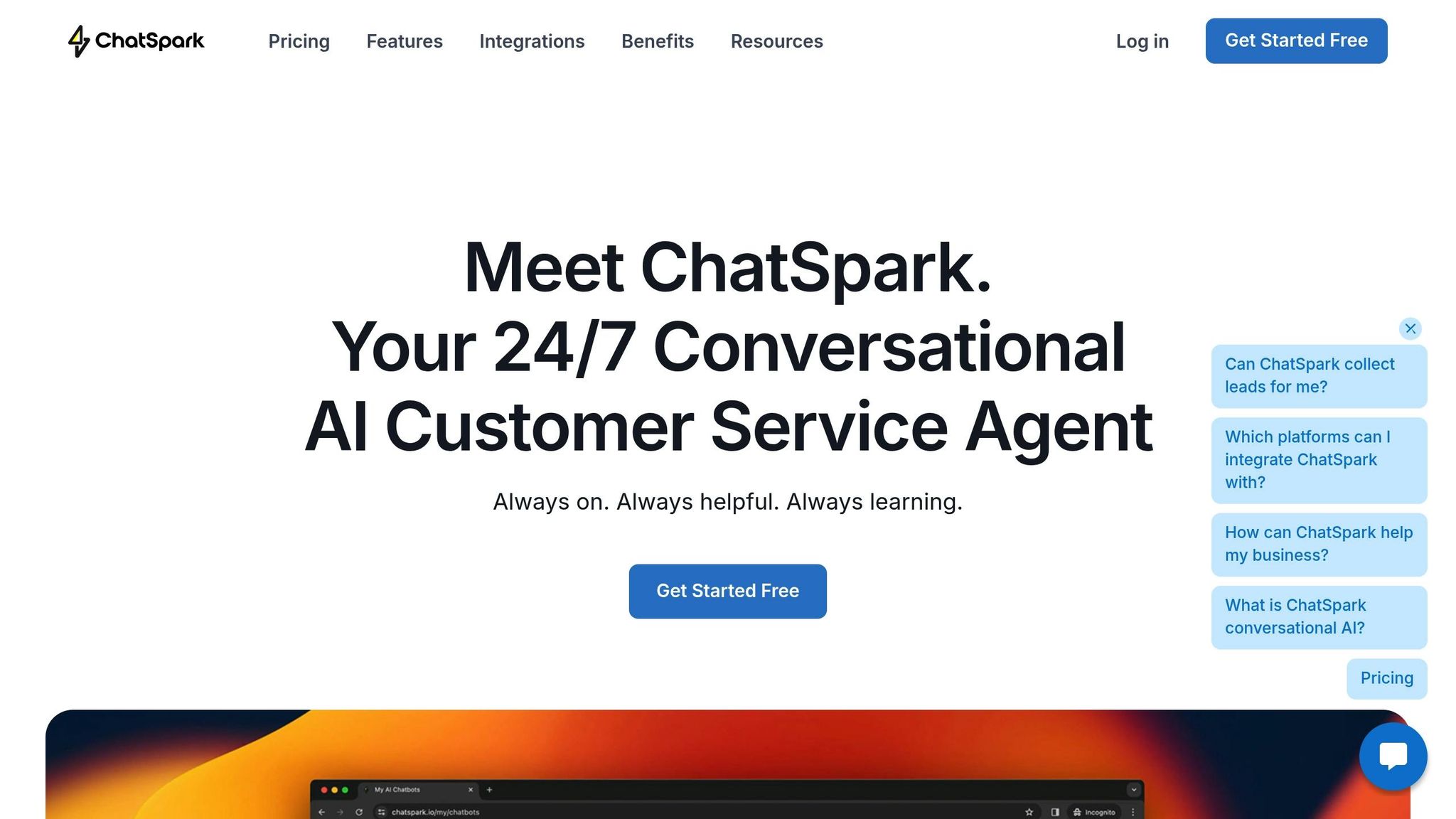
ChatSpark takes multilingual and omnichannel customer support to the next level, ensuring smooth interactions across channels and languages. It can automatically detect a customer’s language at the start of a conversation and even handle mid-conversation language switches across 85+ languages without a hitch [18]. For example, a customer could begin chatting in Spanish on your website, continue the conversation on WhatsApp, and switch to English - all without disruptions.
What sets ChatSpark apart is its ability to tailor responses to regional nuances, reflecting local communication styles and expectations. This approach makes customers feel genuinely understood, not just translated. And it’s no small matter - 72% of consumers prefer buying products in their native language, while 40% avoid purchasing from websites that don’t support their language [21]. These features lay the groundwork for ChatSpark’s advanced multilingual support tools.
ChatSpark Features and Benefits
ChatSpark offers 24/7 automated support, handling everything from answering inquiries to capturing leads and driving conversions. It also includes analytics and reporting tools to monitor performance across languages and channels [7][19]. Its lead capture feature integrates seamlessly with Zapier, automatically syncing email and phone data into your CRM [19].
The platform is highly flexible when it comes to training its AI. You can use a variety of data sources, such as website URLs, PDFs, CSV files, Google Docs, and even YouTube transcripts. Each plan supports up to 750 words per page [19]. For businesses seeking a polished, branded experience, higher-tier plans include unbranded widgets and GA4 tracking to gain deeper insights into customer behavior [19].
ChatSpark Integrations and Scalability
ChatSpark’s real power lies in its ability to integrate with a wide range of tools. It connects with Facebook Messenger, Instagram, WhatsApp, Telegram, and Slack, as well as over 5,000 additional apps through Zapier. This enables automated workflows with tools like Square Booking, Calendly, and various CRMs [7][20].
For a hybrid approach, ChatSpark integrates with Freshchat, allowing AI to manage routine queries while seamlessly passing more complex issues to human agents [7]. Its WhatsApp integration is particularly robust, offering persistent chat history to maintain context in high-volume conversations [7].
Enterprise users can collaborate with ChatSpark’s engineering team to build custom integrations tailored to specific needs. Additionally, the platform is working toward SOC2 compliance, ensuring top-tier data security for larger organizations [20].
ChatSpark Pricing Plans
ChatSpark’s pricing is designed to accommodate businesses of all sizes:
| Plan | Monthly Price | Messages | Key Features |
|---|---|---|---|
| Basic | $19 | 100 | 1 agent, 25 pages, analytics, multiple data sources |
| Plus | $59 | 250 | 1 agent, 50 pages, analytics, multiple data sources |
| Pro | $129 | 2,000 | 1 agent, 500 pages, all integrations (WhatsApp, Slack, etc.), unbranded widgets, GA4 tracking |
| Enterprise | Custom | Custom | Custom SLAs, priority support, training & onboarding, dedicated account management |
All plans include support for 85+ languages and access to multiple training data sources [18][19]. Businesses opting for annual subscriptions can enjoy a 14% discount [19]. For the Pro and Enterprise plans, each AI agent is optimized for a specific communication channel, ensuring top-notch performance [19].
Conclusion
Multilingual AI transforms language challenges into global business opportunities. With the ability to provide instant, round-the-clock support in over 85 languages, businesses no longer need to rely on costly multilingual teams by learning how to automate customer support without losing quality. The stats are clear: 75% of consumers prefer brands offering support in their native language, 68% would switch to a competitor for this feature, and retaining a customer through localized support is five times cheaper than acquiring a new one[9][10].
The real strength of multilingual AI lies in its seamless, omnichannel experience. Imagine a customer starting a conversation on your website, continuing it on WhatsApp, and even switching languages mid-discussion - all without missing a beat. This goes beyond simple translation, incorporating local nuances like regional idioms, communication styles, and preferences for date or currency formats.
ChatSpark brings these capabilities to life with features like automatic language detection and smooth integration across platforms like websites, Instagram, Facebook, WhatsApp, Telegram, and Slack. These tools are setting a new standard for customer support, making it easier than ever for businesses to break down language barriers and scale globally.
The shift toward multilingual, omnichannel support is already reshaping customer interactions. The market for multilingual customer-service software is expected to hit $285 million by 2025[15]. Companies like Weee! are already reaping the benefits, seeing a 50% drop in resolution times and achieving a 96% customer satisfaction score after adopting multilingual AI[9]. The question now isn’t if you should implement multilingual AI - it’s how quickly you can do it to stay ahead of the competition.
FAQs
How does multilingual AI enhance customer satisfaction?
Multilingual AI makes it easier for businesses to connect with customers by communicating in their preferred language. This creates a more personalized and smooth experience. These systems can automatically detect and switch between languages, saving customers from the hassle of manually selecting their language - cutting down on frustration.
By grasping cultural subtleties, idioms, and regional variations, multilingual AI crafts responses that feel natural and respectful. This builds trust and strengthens customer relationships. Plus, it offers 24/7 support across various channels, ensuring fast and consistent service. Businesses can handle large volumes of inquiries efficiently without needing a large multilingual team. The result? Greater accessibility, stronger loyalty, and a boost to the brand’s reputation.
What are the cost-saving benefits of using multilingual AI for customer support?
Using multilingual AI in customer support can help businesses save a lot of money. For starters, AI-powered tools reduce the need to hire and train separate support agents for each language. This alone can cut staffing costs by an estimated 50–60%. Plus, AI chatbots work around the clock at a fixed cost, eliminating the need to pay for overtime or night shifts.
Another big win is efficiency. Multilingual AI can handle a high number of inquiries at the same time, meaning smaller support teams can do more. This reduces operational costs and makes it easier to serve customers worldwide. On top of that, by speeding up response times and lowering the number of escalations, businesses save even more on labor and training - all while improving the overall customer experience.
How does multilingual AI keep conversations consistent across different platforms?
Multilingual AI brings a level of consistency to conversations across various platforms by leveraging advanced language processing and contextual memory. These systems are built to understand and follow the flow of a conversation, regardless of whether it takes place on a website, social media, messaging apps, or other communication channels.
For instance, AI tools can keep track of chat histories, ensuring context is preserved even when users move between platforms. They also handle multiple languages effortlessly, adjusting to regional phrases, idioms, and subtle differences in expression. This allows businesses to deliver a smooth and unified customer experience, no matter where or how people choose to engage.