
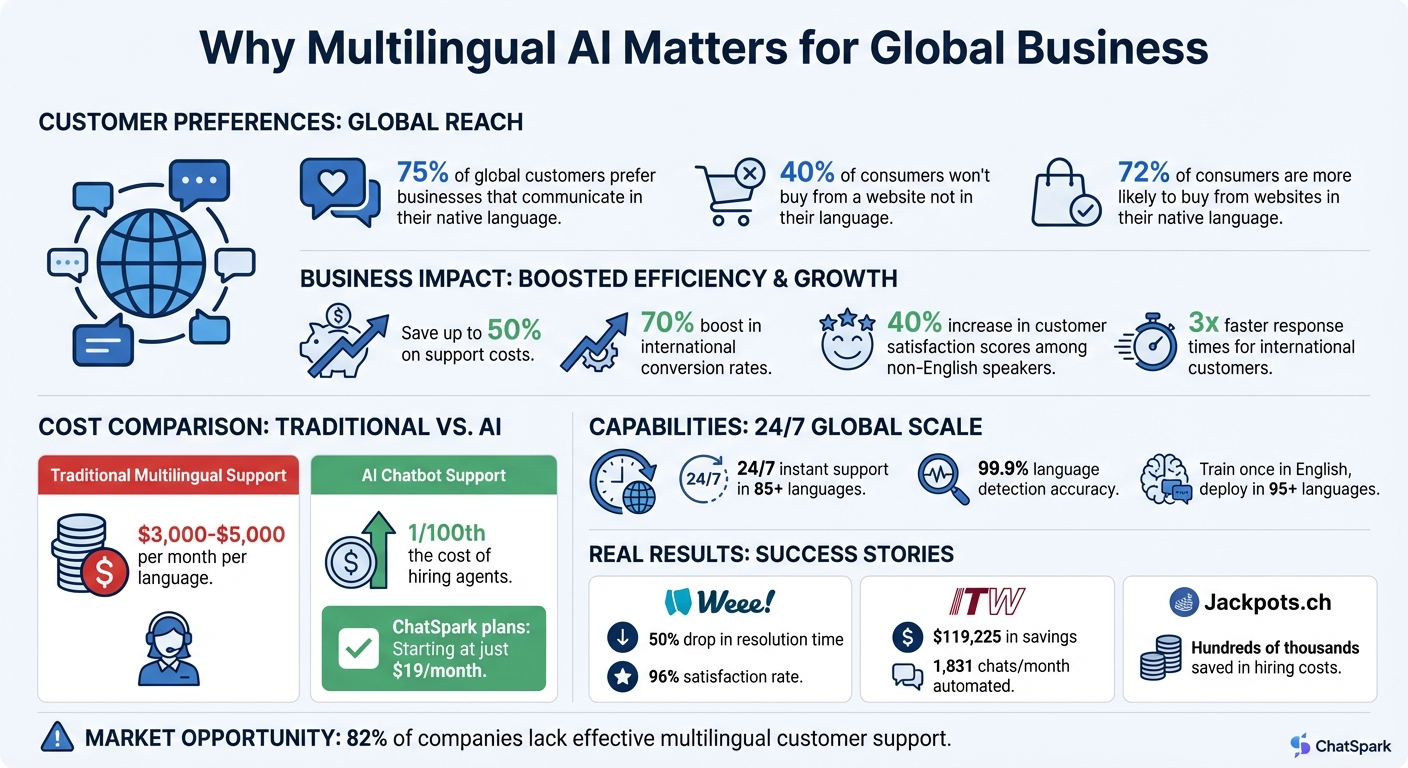
75% of global customers prefer businesses that communicate in their native language. Yet, most companies struggle to provide this. Multilingual conversational AI solves this gap by offering 24/7 instant support in 85+ languages at a fraction of the cost of hiring multilingual staff.
Here’s why it matters:
- 40% of consumers won’t buy from a website not in their language.
- Businesses save up to 50% on support costs while improving customer satisfaction.
- AI systems like ChatSpark handle complex queries, understand intent, and automate customer support without losing quality.
For example, in 2025, Weee! (an online Asian supermarket) saw a 50% drop in resolution time and a 96% satisfaction rate after adopting multilingual AI. With plans starting at just $19/month, this technology eliminates language barriers and helps businesses connect with global audiences effortlessly.
Key Benefits:
- Cost Efficiency: AI support costs 1/100th of hiring multilingual agents.
- Scalability: Add new languages in minutes, not months.
- Improved Customer Experience: Boost satisfaction and loyalty by interacting in customers’ preferred languages.
Businesses like ITW and Jackpots.ch have saved thousands of dollars while expanding global reach. Multilingual AI is no longer a luxury - it’s a necessity for scaling and staying competitive in today’s global market.
Multilingual AI Customer Support Statistics and Benefits
What Is Multilingual Conversational AI?
Multilingual conversational AI leverages Natural Language Processing (NLP) to instantly recognize, understand, and respond to customer inquiries in over 95 languages [1]. Unlike basic translation tools, this technology goes beyond word-for-word translation, interpreting the intent behind messages while accounting for cultural nuances, slang, and even typos.
The distinction lies in how language is handled. Traditional chatbots often depend on external translation services, resulting in responses that can feel robotic or out of context [4]. Modern multilingual AI, on the other hand, processes intent directly in each language, ensuring responses are accurate and contextually appropriate. Heather Shoemaker, CEO of Language IO, sums it up perfectly:
"AI that doesn't speak your customer's language isn't intelligent - it's incomplete" [7].
This technology allows businesses to "train once" in a primary language (commonly English) and then provide seamless support worldwide. There's no need to build separate bots or scripts for every language. The AI taps into a single knowledge base to deliver fluent, localized responses that align with the brand's tone and cultural context. Advanced systems can even identify a customer's language from the very first message with an impressive 99.9% accuracy [1].
How It Works
The system operates through three core functions working together seamlessly. First, it identifies the language using linguistic markers [9]. Next, it applies semantic understanding to grasp intent and context before searching the knowledge base for the most relevant answer [1]. Finally, through Natural Language Generation (NLG), it crafts responses that adapt to regional dialects, cultural norms, and the appropriate level of formality - like choosing between the formal "Sie" and informal "Du" in German [1][4].
Some advanced systems even handle code-switching, adjusting dynamically when users mix languages in a single interaction [1]. This efficient, context-aware process enables businesses to deliver meaningful, localized customer experiences on a global scale.
For example, in March 2026, ITW (Illinois Tool Works) reported that their ChatSpark AI Agent managed two of their largest product lines, handling an average of 1,831 chats per month without human involvement. Lorri G., Customer Service & Technical Support Manager at ITW, highlighted the financial impact, noting savings of $119,225 from this implementation [8].
Why It Matters
This level of precision is changing the way businesses interact with customers worldwide. Multilingual AI has a direct effect on both revenue and customer loyalty. For instance, implementing these AI-driven chatbots has been shown to boost international conversion rates by 70% [2]. By eliminating the need for extensive staffing, businesses not only save on costs but also achieve 24/7 global coverage [4]. As Maxwell Timothy from Crisp explains:
"Adding a new language to your coverage isn't a hiring decision: it's a configuration one" [4].
Beyond cost efficiency, multilingual AI promotes accessibility and inclusivity. In healthcare, for example, it has increased patient engagement by 30% and reduced hospital readmissions by up to 25% [3]. By interacting with customers in their native language, businesses foster trust, enhance satisfaction, and create experiences that feel personal and meaningful - rather than just translated.
Key Features That Enable Personalization
Multilingual AI isn't just about translating words - it's about creating meaningful, personalized interactions. Three standout features make this possible: real-time language detection, contextual understanding, and omnichannel integration. Together, these capabilities elevate customer support by delivering responses that feel tailored and relevant.
Real-Time Language Detection
Imagine starting a conversation in your native language without needing to select it manually. Multilingual AI makes this possible by detecting a customer's language instantly, with an accuracy rate of over 99.9% [1]. It even recognizes regional variations, like the differences between Latin American and European Spanish. And if a customer switches languages mid-conversation (a behavior called "code-switching"), the AI seamlessly adapts without missing a beat.
Why does this matter? Research shows that consumers overwhelmingly prefer support in their native language when making purchasing decisions [5]. Even better, once the AI is trained in one primary language, it updates its knowledge base across all 85+ supported languages at once [1][5]. This ensures a smooth and culturally aware experience throughout the customer journey.
Contextual Understanding and Intent Recognition
Multilingual AI doesn't stop at translation - it understands the why behind a question. For example, whether someone asks, "Where's my order?" in English or "¿Dónde está mi pedido?" in Spanish, the AI identifies the intent as order tracking and responds appropriately.
This deep contextual understanding also helps maintain conversation flow, even if a customer switches languages mid-chat. The AI remembers prior interactions, picks up on tone, and delivers responses that feel specific to the situation rather than generic. By focusing on intent, it creates a more engaging and satisfying experience. It's worth noting that 81% of companies find training a single-language chatbot more challenging than expected, highlighting how multilingual AI simplifies handling diverse customer needs [7].
Omnichannel Integration
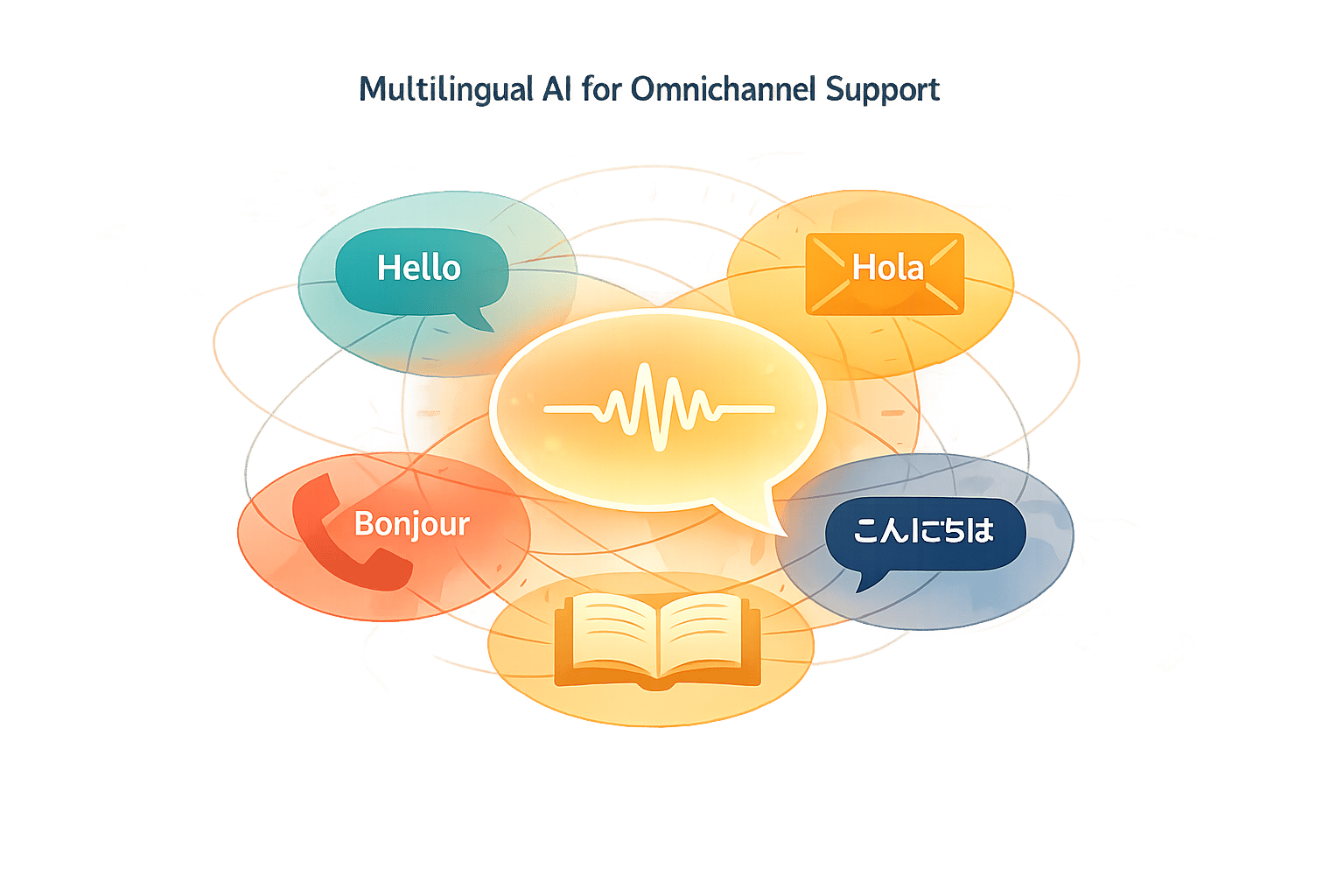
Today’s customers interact with brands across multiple platforms - whether it’s WhatsApp in Brazil, Telegram in Europe, or Instagram in the U.S. Multilingual AI ensures a consistent experience across all these channels, maintaining the same brand voice and accuracy everywhere, from websites to messaging apps like Facebook Messenger and Slack.
When an issue requires human intervention, the AI steps in to translate the conversation transcript for agents, ensuring smooth handoffs. Businesses can start by focusing on the 3–5 languages and platforms that generate the most traffic, scaling up as needed [4]. This omnichannel approach ensures customers receive seamless, round-the-clock support, no matter where they are or how they choose to connect.
Benefits for Customer Support
Multilingual AI is reshaping customer support by eliminating language barriers, cutting costs, and creating tailored experiences for customers, no matter where they are or what language they speak.
24/7 Support in 85+ Languages
Customers expect help whenever they need it - whether it’s the middle of the night in Tokyo or a Sunday afternoon in Berlin. Multilingual AI ensures they get immediate answers without requiring language-specific staff to be available.
This constant availability is critical because 75% of consumers are more likely to buy again from a brand that offers support in their native language [4]. When customers can address their concerns in the language they’re most at ease with, it builds trust naturally. The AI doesn’t just translate; it also adapts to cultural norms and expectations, making interactions feel more personal and relatable.
By providing instant support in over 85 languages, businesses remove obstacles that might otherwise lead customers to abandon their purchases. This not only improves engagement but also significantly lowers operational costs.
Cost Savings and Scalability
Multilingual AI isn’t just about better service - it’s also about financial efficiency. Traditional multilingual support often involves hiring native-speaking agents, which can cost $3,000 to $5,000 per month per language [2]. Alternatively, outsourcing 24/7 coverage in one language can run between $30,000 and $90,000 annually [4]. In contrast, AI chatbots can operate for as little as 1/100th of the cost of hiring agents [4], with many businesses cutting global support costs by 50% [2].
Take Jackpots.ch, Switzerland’s first online casino, as an example. In October 2025, the company implemented multilingual AI to assist customers in English, German, French, and Italian. Under the leadership of Customer Service Manager Urs Klingler, they scaled their support without adding staff - saving hundreds of thousands of dollars in potential hiring costs while ensuring 24/7 help for urgent issues like payment processing [11]. With tools like ChatSpark, expanding into new languages is as simple as updating a configuration, not launching a hiring campaign.
"Adding a new language to your coverage isn't a hiring decision: it's a configuration one."
- Maxwell Timothy, Crisp [4]
This scalability allows businesses to quickly enter new markets without delays. A single knowledge base trained in English can seamlessly provide accurate answers across multiple languages, even during demand surges or regional expansions.
Improved Customer Satisfaction
Language support has a direct impact on customer loyalty. AI-powered multilingual support can boost customer satisfaction scores by 40% among non–English speakers [2] and deliver responses three times faster for international customers [2]. When people get help in their preferred language without delays, they feel valued and understood - key ingredients for building long-term relationships that lead to repeat purchases and brand advocacy.
Currently, 82% of companies lack effective multilingual customer support [12]. Addressing this gap not only improves satisfaction scores but also captures market opportunities that competitors overlook. These improvements highlight a crucial takeaway: personalized multilingual interactions enhance the customer experience, strengthen loyalty, and ultimately drive higher conversion rates.
How ChatSpark Delivers Multilingual Personalized Support
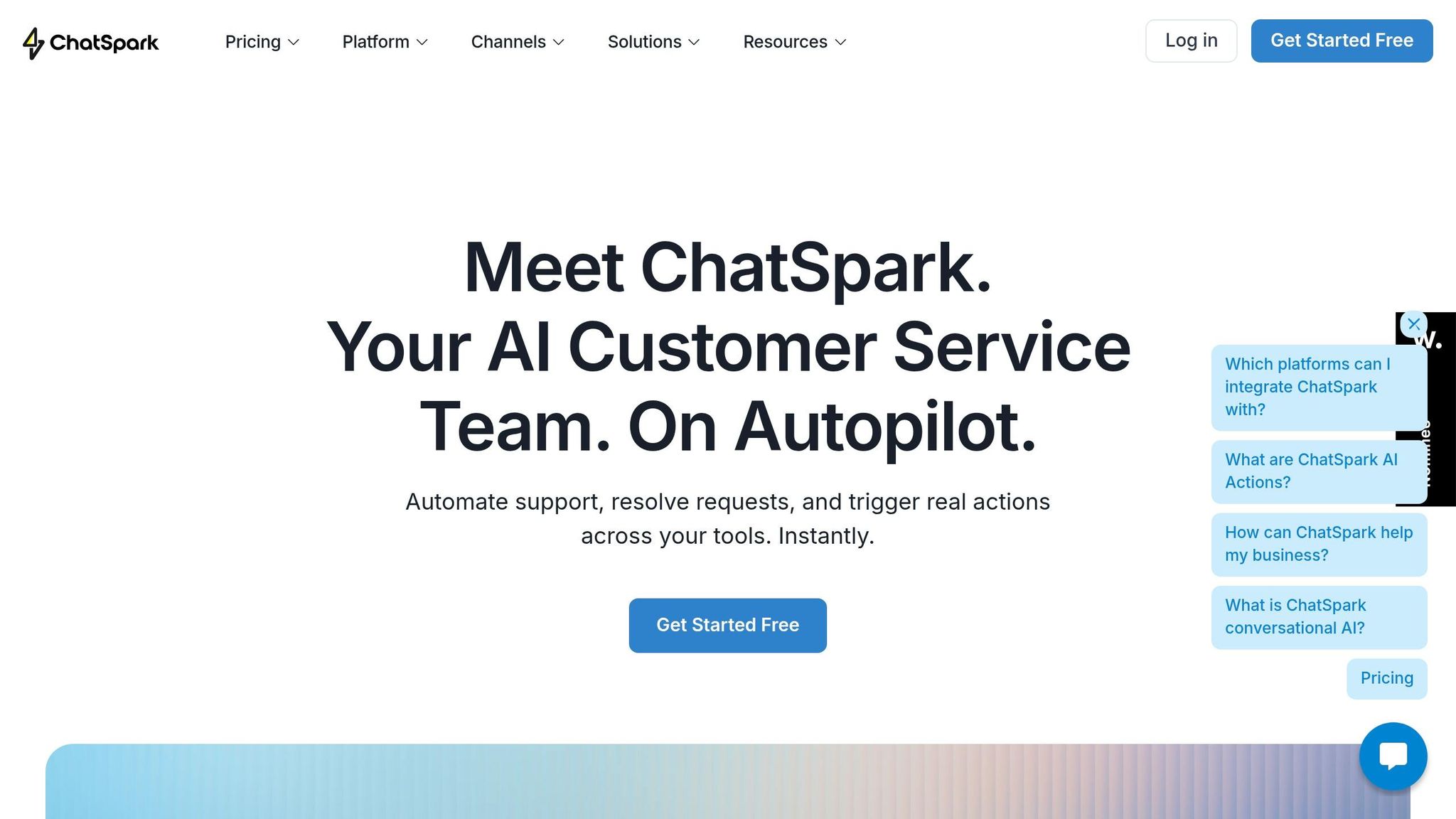
ChatSpark simplifies multilingual customer support by combining intelligent automation with practical business tools. Its standout "train once" feature allows businesses to create an AI agent using documents or media - usually in English - and instantly deploy it to respond fluently in over 95 languages. No need for separate training sessions for each language, saving businesses months of effort. Instead, setup takes just minutes, replacing lengthy hiring and training processes [1][10].
The platform doesn’t just translate - it adapts to local conventions, date formats, and regional nuances, like distinguishing between Latin American and European Spanish. It understands intent and context, making interactions feel natural and intuitive [1][10].
Here’s a real-world example: Between July and October 2025, a global construction products company used ChatSpark for one of its flagship brands. Over those four months, the AI handled 10,754 messages, captured 153 new leads, and achieved a 98% resolution rate. This saved the company over 66 days of agent time and resulted in $47,880 in cost savings, all from an initial investment of around $4,000 [13][15].
These capabilities make ChatSpark a game-changer - not just for global customer support but also for handling high-volume inquiries efficiently.
Key Features of ChatSpark
ChatSpark’s success is built on a range of features that enhance its multilingual capabilities and usability:
- Omnichannel Communication: ChatSpark integrates seamlessly with six major channels - Website, WhatsApp, Instagram, Facebook Messenger, Telegram, and Slack. This ensures a consistent brand voice, whether customers message at 2:00 AM on Instagram or during regular business hours on WhatsApp [13][15].
- Task Automation: The platform automates 140+ tasks across 40+ platforms through its AI Actions. From checking order statuses in French to booking appointments in German or creating support tickets in Spanish, ChatSpark handles it all in the customer’s preferred language [13][15].
- CoPilot for Internal Teams: ChatSpark CoPilot, a browser extension, integrates with tools like Gmail and Salesforce. It helps human agents draft culturally appropriate responses using the same knowledge base as the AI agent, ensuring smooth handoffs for complex cases without language barriers [13][15].
- Enterprise-Grade Security: With AES-256 encryption for data at rest and in transit, GDPR compliance, and 99.9% uptime SLAs, ChatSpark prioritizes security and reliability. Businesses typically see AI resolution rates above 80%, with some reporting rates as high as 98%. One customer even noted a 20-point boost in customer satisfaction after adopting the platform [15][13].
"ChatSpark has been managing two of our largest product lines over the past year. It currently handles an average of 1,831 chats per month without any human intervention. Since implementing it on our website, we've realized measurable savings of $119,225." - Lorri G., Customer Service & Technical Support Manager [13][15]
Pricing Plans
ChatSpark offers four flexible pricing tiers, all including multilingual support at no extra cost [1]. Annual billing comes with a 14% discount, equivalent to two months free [14].
| Plan | Monthly Price | Messages/Month | AI Actions | Channels | Key Features |
|---|---|---|---|---|---|
| Basic | $19 | 100 | None | Website | 1 AI Agent, 25 training pages, basic analytics |
| Plus | $59 | 250 | 5 | Website | ChatSpark CoPilot, REST API access, 50 training pages |
| Pro | $129 | 2,000 | 40 | All 6 Channels | Unbranded widgets, GA4 tracking, 500 training pages, omnichannel deployment |
| Enterprise | Custom | Bespoke | Unlimited | All 6 Channels | Webhooks, role-based access, audit logs, dedicated account management, priority support |
The Basic plan, priced at $19/month, is perfect for solo entrepreneurs looking to test multilingual support on a single website using a customer service automation checklist. For $59/month, the Plus plan adds CoPilot for team collaboration and API access for custom integrations. At $129/month, the Pro plan unlocks omnichannel deployment and automates workflows with 40 AI Actions. For businesses with complex needs, the Enterprise plan offers unlimited AI Actions, custom message limits, and priority support [14].
With ChatSpark, businesses can start delivering personalized support in 95+ languages for less than the cost of a single hour of traditional customer service. As their needs grow, they can scale without the steep costs of hiring multilingual staff.
Best Practices for Implementation
Successfully implementing multilingual AI is all about thoughtful integration, consistent monitoring, and smart expansion. Whether you're aiming to streamline customer support or create smoother interactions, the way you set up and refine your system can make all the difference.
Integrate with Existing Tools
Your multilingual AI should work effortlessly with the tools your team already relies on. Think of it as an extension of your CRM, knowledge base, and ticketing systems. For instance, if a Spanish-speaking customer asks about their order status, the AI should pull that information directly from your order management system, cutting down on repetitive back-and-forth.
One efficient approach? Train your AI on a single English knowledge base and translate it into over 95 languages automatically [1][2]. This eliminates the hassle of managing separate knowledge bases for each language, saving both time and resources. Additionally, set up language-aware features like translated conversation histories for agents [21] and prompts to detect when a customer switches languages mid-conversation [16].
Once you've got the integration running smoothly, the next step is keeping a close eye on performance so you can tweak and improve as needed.
Monitor and Optimize Performance
Getting your AI up and running is just the beginning. To truly make it effective, you’ll need to track its performance and refine it over time. Focus on metrics like CSAT scores by language, First Response Time (aim for under 90 seconds) [19], and how often translations need manual overrides [18].
Start small by piloting your AI in your top three to five markets. Use CRM and traffic data to identify high-demand languages [4]. Miscommunication in customer interactions can be costly - companies lose anywhere from $450,000 to $2 million annually due to language barriers [18]. To maintain quality, implement checkpoints using frameworks like Multidimensional Quality Metrics (MQM) to determine when human review should step in. While AI translations hit about 70% to 85% accuracy, human translators can achieve 95% to 100%. Combining both ensures the best results [20].
Enable Multichannel and Voice Support
Once your AI is running efficiently, it’s time to broaden its reach. Deploy it across multiple channels - web, mobile apps, social media, and voice platforms - to meet customers wherever they are.
Here’s why this matters: Supporting only English limits you to about 25% of internet users. Adding languages like Chinese, Spanish, or Arabic can help you connect with an additional 30% or more of the global audience [2].
Start by focusing on your busiest channels and perfecting support in your initial languages. Once customer satisfaction is stable, you can move on to more complex platforms like voice IVR [17][19]. For voice interactions, aim for a total response time of around 800 milliseconds, even with translation delays of 50 to 150 milliseconds per direction [18]. Finally, include per-message language detection to handle customers who switch languages mid-conversation. This allows the AI to adapt instantly without losing track of the context [16].
Conclusion
Language matters - a lot. When 72% of consumers say they’re more likely to buy from websites in their native language [12], it’s clear that breaking language barriers isn’t just a courtesy; it’s a business necessity.
ChatSpark offers a solution that balances scalability, personalization, and affordability. As discussed earlier, this unified AI strategy doesn’t just save money; it builds stronger customer relationships. Supporting over 85 languages, operating 24/7, and requiring just one English-based training to serve a global audience, ChatSpark delivers consistent, brand-aligned interactions at a fraction of the cost - roughly 1/100th of hiring native-speaking staff [4].
And these aren’t just hypothetical perks. Real-world examples back it up. Take Weee!, America’s largest online Asian supermarket. In November 2025, they introduced multilingual voice AI and saw impressive results: resolution times cut in half, agent efficiency up by 20%, and customer satisfaction soaring to 96% [6].
The opportunity is massive. With 82% of companies still struggling to provide effective multilingual support [12], early adopters are positioned to lead. Whether you’re a small business owner starting with the $19/month Basic plan or a large enterprise needing custom solutions, ChatSpark eliminates the lengthy hiring and training cycles traditionally required for native language support.
So, how do you get started? Focus on your most in-demand languages first, integrate ChatSpark into your existing systems, and track performance by language. The tools are ready. It’s time to use them to build trust and loyalty with customers across the globe.
FAQs
How do I choose which languages to launch first?
To figure out which languages to prioritize for your multilingual AI, dig into your customer data to uncover the most frequently requested ones. Begin with one or two languages that have the highest demand and market potential. This keeps things manageable while maintaining quality. By rolling out additional languages gradually and learning from each phase, you can make sure your support evolves in step with your audience’s needs and delivers meaningful results.
What data does ChatSpark need to train in one language and support 85+ more?
ChatSpark's AI is trained using a wide range of data sources. These include uploaded files such as PDFs, CSVs, DOCs, and PPTs, as well as YouTube transcripts, raw text, Google Docs, and direct text input through a rich editor. It also incorporates content from online sources like websites and specific URLs. This broad data foundation allows ChatSpark to deliver accurate and context-aware responses in over 85 languages.
When should a human agent take over from the AI?
When the AI struggles to handle a query due to its complexity, inaccuracies, or general confusion, it's time for a human agent to step in. Some situations also demand a personal touch - like addressing unique customer needs or managing emotionally sensitive concerns - where human understanding and empathy are irreplaceable.