AI customer service agents are transforming customer support in 2026. Unlike older chatbots that rely on scripts and struggle with complex tasks, these advanced systems handle multi-step workflows, maintain conversation context, and resolve issues autonomously. Powered by language models like GPT-4o and Claude 4.5, they integrate with tools like CRMs and payment platforms to take direct actions, such as processing refunds or scheduling appointments.
Key differences between AI agents and chatbots:
- AI agents: Perform tasks, understand context, and continuously learn.
- Chatbots: Provide static, FAQ-style responses with limited functionality.
Businesses report faster responses (under 2 seconds), higher resolution rates (up to 85%), and improved customer satisfaction (85%+). With API costs dropping 90% since 2023, even small companies can now utilize this technology. Platforms like ChatSpark make implementation easier, offering omnichannel support and seamless integration with existing tools. AI agents are reshaping customer service by automating repetitive tasks and freeing human teams for complex issues.
Traditional Chatbots vs. AI Customer Service Agents
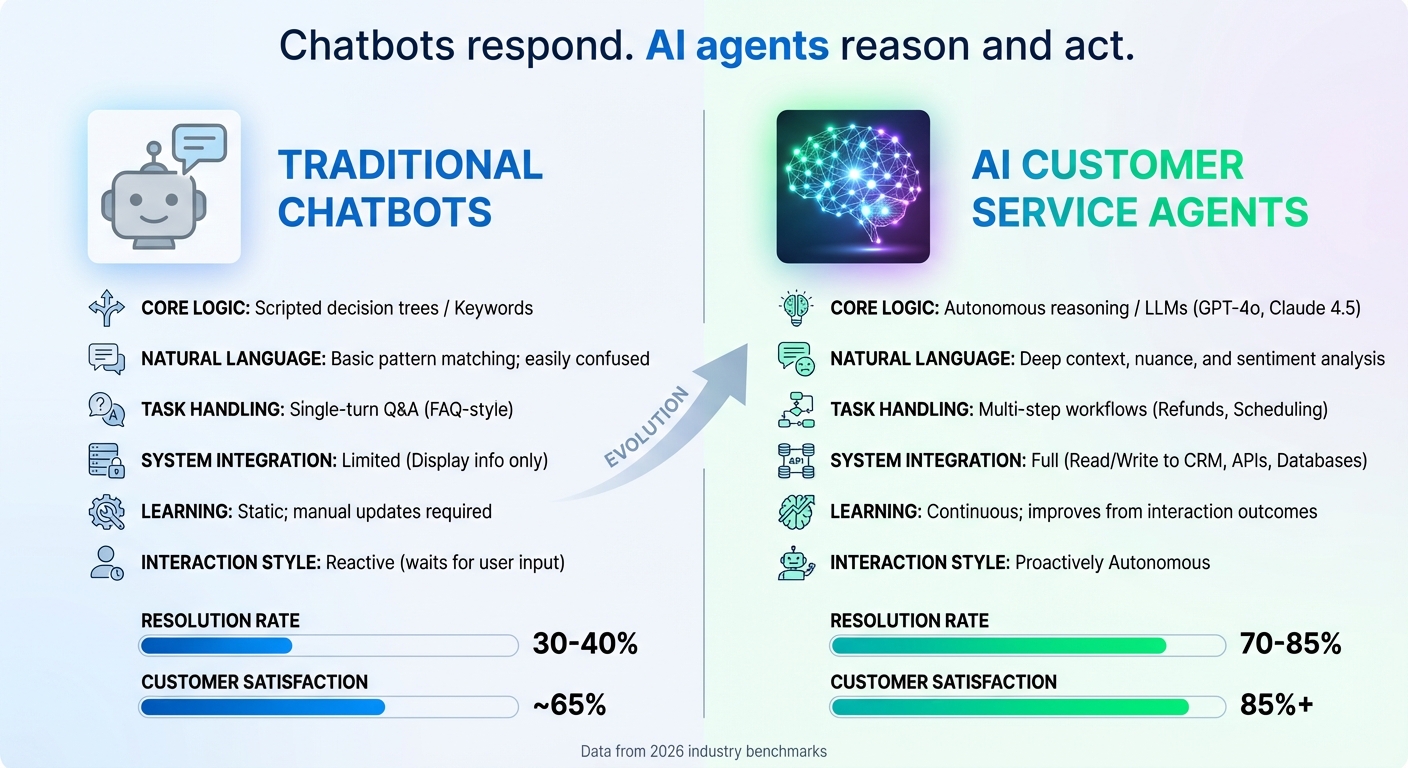
Traditional Chatbots vs AI Customer Service Agents: Key Differences and Performance Metrics 2026
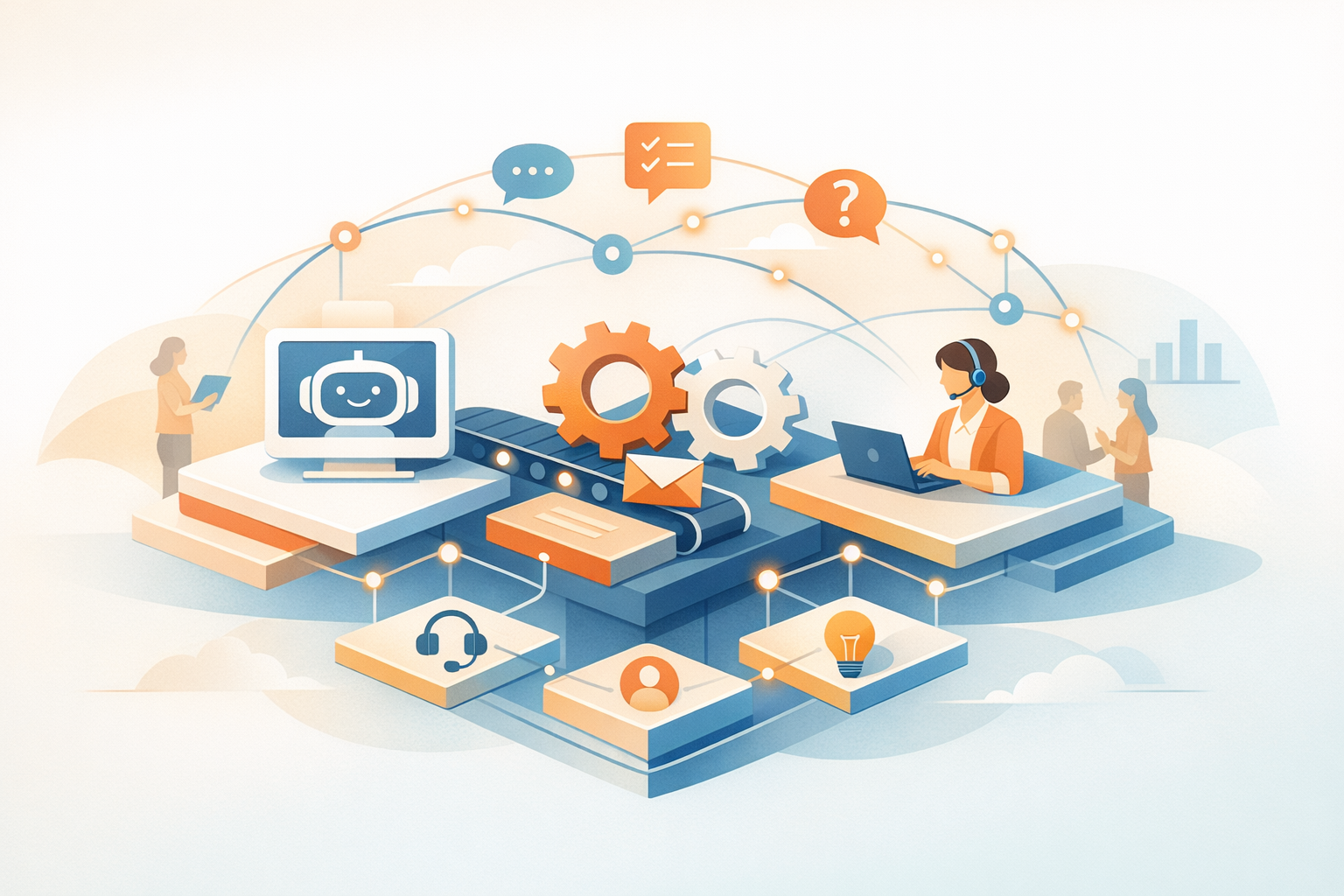
The difference between traditional chatbots and AI customer service agents highlights a major evolution in customer support technology. Traditional chatbots operate based on pre-written scripts and respond only when prompted by customer input. On the other hand, AI agents use autonomous reasoning to complete multi-step workflows and even take proactive actions when necessary [4][6].
"Chatbots respond. AI agents reason and act. This is a key difference."
– BuiltABot Team [4]
Traditional chatbots are limited to read-only functions. They can display information like account balances or return policies but lack the ability to update accounts or process returns. AI agents, however, have full read-write capabilities, enabling them to interact with CRMs, payment systems, and scheduling tools to complete tasks seamlessly [4][6]. This distinction becomes even clearer when comparing their features side by side.
Another key difference is adaptability. Unlike chatbots that require manual script updates to evolve, AI agents learn continuously from their interactions. This allows them to refine their performance over time without ongoing human input [4][5]. Additionally, AI agents are proactive. They can monitor customer behavior, such as abandoned shopping carts or delayed shipments, and initiate contact before the customer even reaches out [6]. The table below highlights these differences in more detail.
Feature Comparison Table
| Feature | Traditional Chatbot | AI Customer Service Agent |
|---|---|---|
| Core Logic | Scripted decision trees / Keywords | Autonomous reasoning / LLMs (GPT-4o, Claude 4.5) |
| Natural Language | Basic pattern matching; easily confused | Deep context, nuance, and sentiment analysis |
| Task Handling | Single-turn Q&A (FAQ-style) | Multi-step workflows (Refunds, Scheduling) |
| System Integration | Limited (Display info only) | Full (Read/Write to CRM, APIs, Databases) |
| Learning | Static; manual updates required | Continuous; improves from interaction outcomes |
| Interaction Style | Reactive (waits for user input) | Proactively Autonomous |
| Resolution Rate | 30-40% [4] | 70-85% [4] |
| Customer Satisfaction | ~65% [4] | 85%+ [4] |
The numbers speak for themselves. Traditional chatbots resolve only 30–40% of customer inquiries, whereas AI agents handle 70–85% of issues without the need for human intervention [4]. This improvement is reflected in customer satisfaction rates as well, with AI agents achieving 85%+ compared to around 65% for chatbots [4].
For instance, during its U.S. expansion, Papier implemented AI agents to manage after-hours ticket backlogs, significantly improving response times and efficiency [5].
What AI Customer Service Agents Can Do in 2026
By 2026, AI customer service agents are managing 75% to 92% of customer interactions without human intervention [8]. This marks a major transformation in how businesses approach customer support. These systems go far beyond answering basic questions - they handle intricate tasks, gauge customer emotions, and even resolve issues before they arise.
Thanks to reduced API costs, businesses of all sizes can now access advanced AI systems. In fact, 90% of retailers are increasing their AI budgets in 2026 [3], acknowledging that these tools are no longer optional but essential for staying competitive.
Advanced Natural Language Understanding
The AI of 2026 excels at understanding customer intent rather than just picking up on keywords. It retains the context of conversations, so customers don’t have to repeat details like their order number or account information multiple times.
These systems also detect emotional cues in both text and voice. If a customer is frustrated, the AI adapts its tone - offering reassurance or prioritizing speed, depending on the situation [7]. This ability to adjust based on emotional context creates a more personalized and empathetic interaction.
"AI agents need to know who they're talking to and why it matters." – Forrester [3]
Response times are faster than ever, with AI agents delivering replies in under 2 seconds, compared to the 4–8 minute average for human teams [1]. This combination of speed and precision enhances the overall customer experience.
Personalized Responses Based on Customer Data
AI agents integrate data from various channels into a single, unified customer profile [9]. This allows them to provide tailored service without forcing customers to repeat their history across different platforms or interactions.
Predictive analytics plays a key role here. By analyzing past interactions and real-time data, AI can anticipate customer needs. For example, it might recommend a product upgrade based on usage patterns or offer a discount after resolving a service issue [9][8]. Previously, this level of customization required dedicated human account managers.
Take RTR Vehicles as an example - they reduced their customer support team from four full-time employees to just one part-time worker by adopting autonomous AI agents. With a 92% resolution rate, the company saved $15,000 per month in operating costs [8].
Omnichannel Support Across Platforms
AI agents in 2026 operate with a unified "shared brain" across all communication channels [8]. Whether a conversation begins on social media, continues via email, or ends in a website chat, the AI retains the full context. Customers no longer need to repeat their situation or provide the same information multiple times.
These systems seamlessly connect with backend platforms like CRMs, billing systems, and order management tools. This enables them to handle tasks such as processing refunds, updating subscriptions, or canceling orders [11]. Instead of just providing information, the AI takes direct action to resolve issues.
Voice-first integration is now standard. AI voice agents handle phone support as effectively as digital chat, processing complex spoken requests and managing interruptions naturally [1][8]. This ensures a consistent experience, no matter how customers choose to communicate.
On top of this, AI agents excel at proactive problem-solving.
Active Problem Solving and Task Automation
AI agents in 2026 don’t just react to issues - they anticipate them. By monitoring shipping data, account activity, and system alerts, they can resolve problems before customers even notice [8]. For instance, if a delivery is delayed, the AI might send an update, offer a discount, or arrange expedited shipping automatically.
Looking ahead to 2029, these systems are projected to resolve 80% of common customer service issues [10]. Businesses using AI-powered contact centers are already seeing a 20% call deflection rate, with one case study reporting savings of nearly $3.6 million over three years [9].
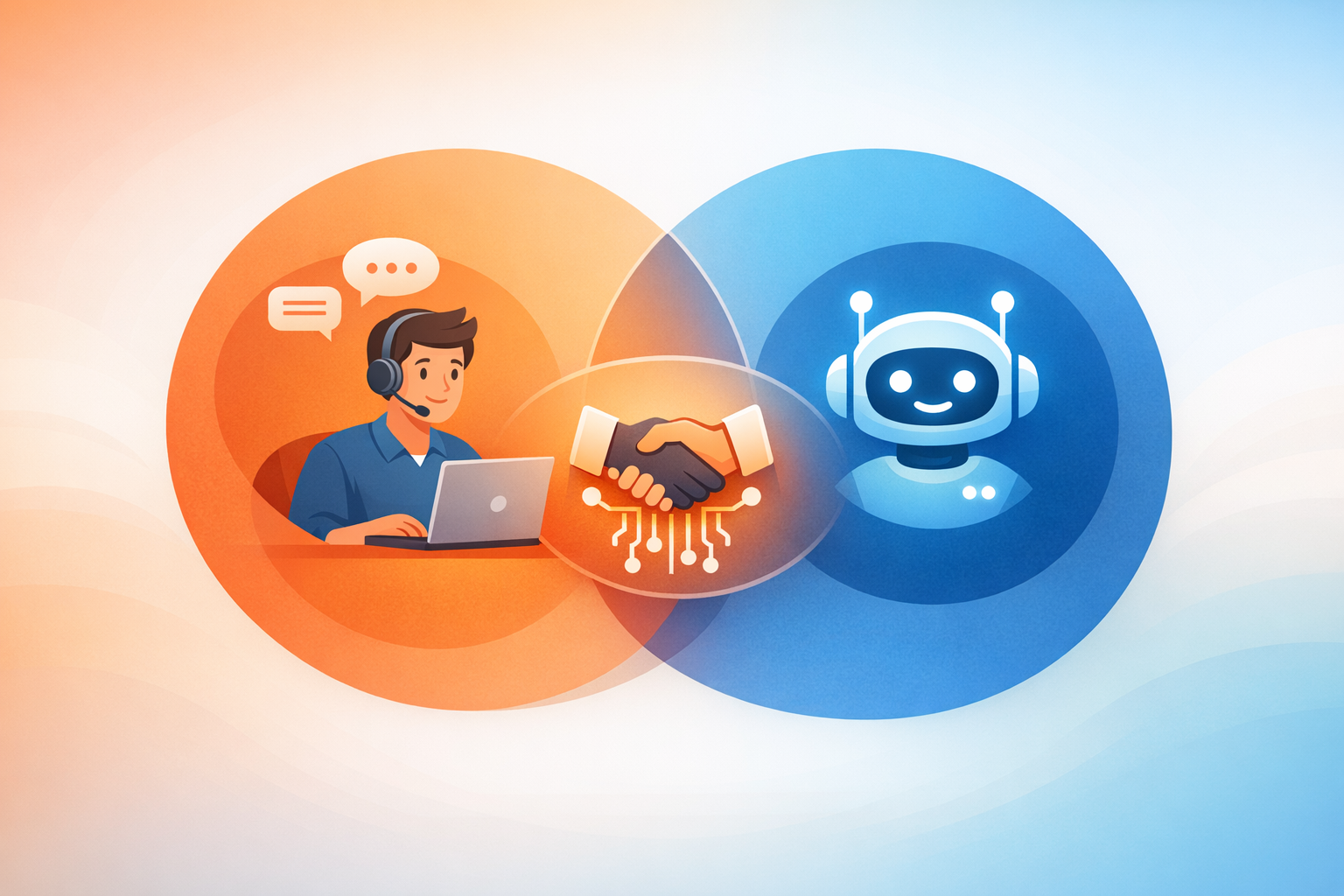
"The future isn't about replacing human customer service representatives - it's about creating powerful partnerships." – Nilovate Team [7]
The traditional boundaries between support, sales, and marketing are fading. AI agents now manage the entire customer relationship lifecycle. They can resolve technical issues, suggest relevant upsells, and even close sales - all in a single interaction [8]. This integration creates smoother operations and a more seamless experience for customers.
With these advancements, businesses are better equipped to deliver proactive, efficient, and frictionless customer experiences.
ChatSpark: AI-Powered Customer Support Platform
ChatSpark showcases the next level of AI customer service, offering businesses a comprehensive solution that goes beyond the limitations of traditional chatbots.
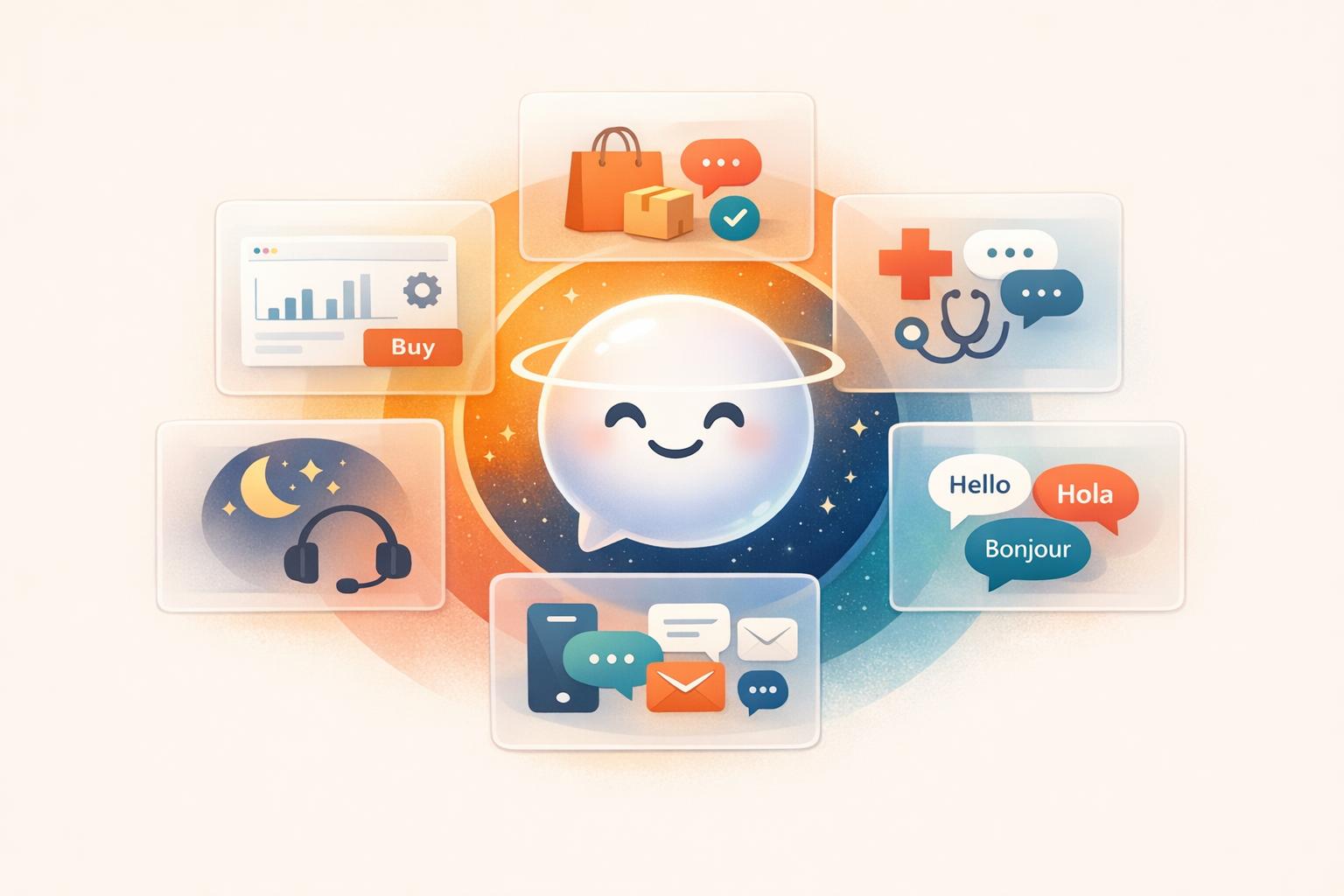
This platform ensures 24/7 omnichannel support, seamlessly managing customer interactions across websites, WhatsApp, Instagram, Facebook Messenger, Telegram, and Slack. With AI-powered knowledge retrieval, ChatSpark delivers fast and accurate responses. Businesses using ChatSpark have reported AI resolution rates of over 80% and response times of less than 2 seconds - raising the bar for customer engagement [13].
Features and Capabilities
At the heart of ChatSpark is its advanced 4-step AI engine, which interprets customer intent, reranks information using more than 10 signals, and crafts responses in your brand’s unique voice [18,20]. This engine integrates directly with your company’s data through Retrieval-Augmented Generation (RAG), ensuring responses are accurate and rooted in your information, minimizing errors or "hallucinations."
With over 140 pre-built AI actions across 40+ platforms, ChatSpark agents can handle tasks like order tracking, appointment scheduling, and CRM updates [13]. For example, between July and October 2025, a global construction products company used ChatSpark to achieve a 98% AI resolution rate across 10,754 messages, saving $47,880 and over 66 days of staff time [13].
"ChatSpark has been managing two of our largest product lines over the past year. It currently handles an average of 1,831 chats per month without any human intervention. Since implementing it on our website, we've realized measurable savings of $119,225." – Lorri G., Customer Service & Technical Support Manager [19,21]
ChatSpark also offers the CoPilot browser extension, which integrates AI assistance into tools like Gmail, Salesforce, and Zendesk. This feature helps human agents by surfacing relevant information and drafting responses [15]. The platform supports over 95 languages with automatic detection and adheres to strict security standards, including AES-256 encryption and GDPR compliance [14].
Pricing Plans
ChatSpark offers flexible pricing options to accommodate businesses of all sizes:
| Plan | Price (USD/month) | Key Features |
|---|---|---|
| Basic | $19 | 100 messages, 1 AI agent, 25 training pages, basic analytics, 14-day trial |
| Plus | $59 | 250 messages, 5 AI Actions, ChatSpark CoPilot, REST API access |
| Pro | $129 | 2,000 messages, 40 AI Actions, omnichannel deployment, GA4 tracking, unbranded widgets |
| Enterprise | Custom (starting $499+) | Unlimited AI Actions, dedicated account manager, custom SLAs, audit logs, RBAC |
Annual billing includes a 14% discount, while enterprise users benefit from a 99.9% uptime SLA [21,22].
Integration Options
ChatSpark ensures smooth integration into your existing workflows, making adoption effortless.
The platform connects with major support systems like Zendesk, Freshdesk, Intercom, and HappyFox, as well as CRM tools like Salesforce and HubSpot. It also works with e-commerce platforms such as Shopify, BigCommerce, and WooCommerce, and booking tools like Calendly and Google Calendar [12]. Additionally, Zapier integration opens the door to over 5,000 apps, enabling custom workflows without the need for developers [13].
Deploying ChatSpark is quick and user-friendly - simply enter your website URL, add a code snippet, and your AI agent is ready in about 5 minutes [24,25]. For more advanced needs, the REST API allows for custom integrations while maintaining consistent AI-powered interactions.
How to Transition to AI Customer Service Agents
Implementation Steps
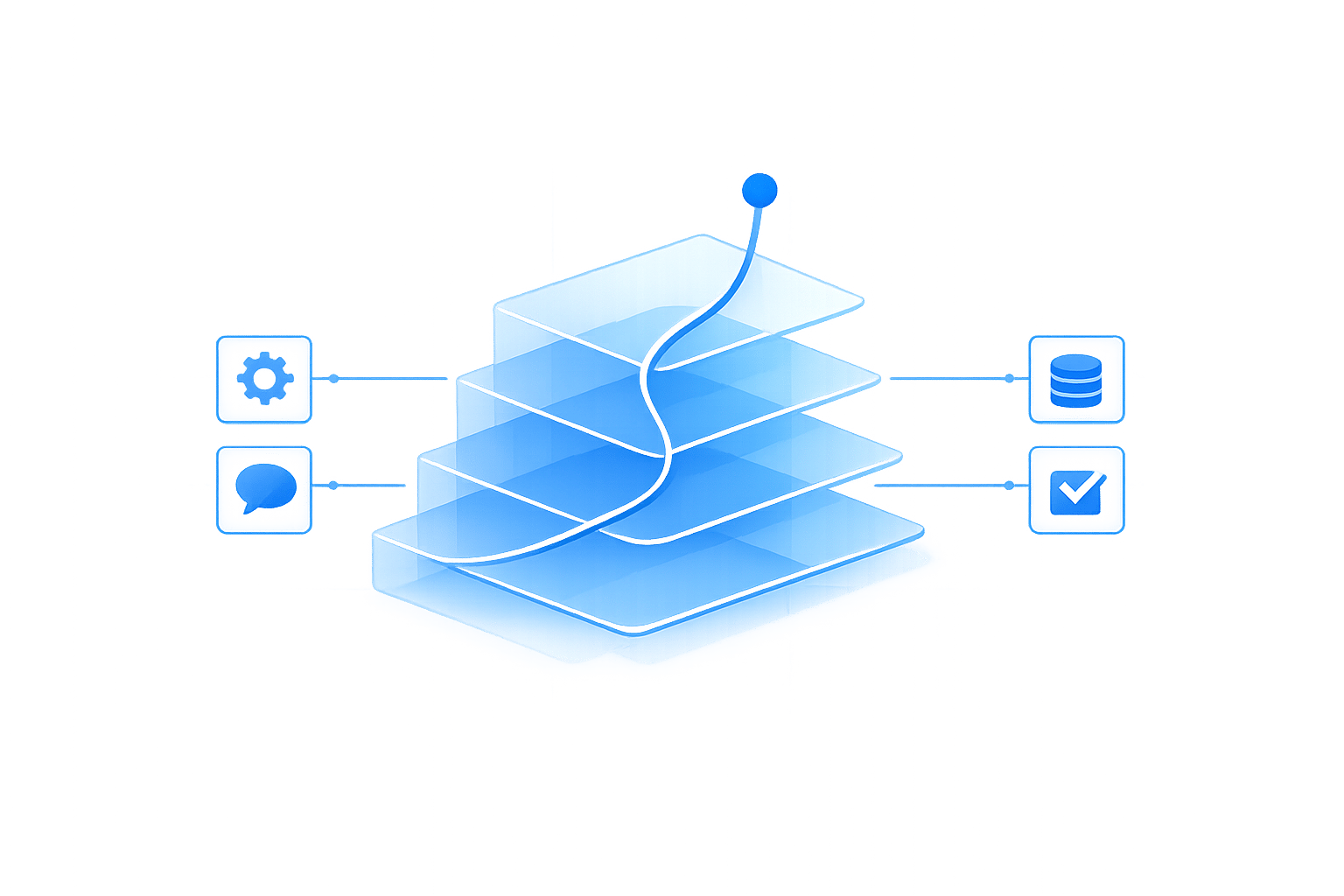
Deploying AI customer service agents effectively involves a phased approach. Start with the Foundation phase, where you analyze the past 90 days of support tickets to identify three to five high-volume, low-complexity queries. These repetitive questions are perfect candidates for early automation and can provide quick wins. Next, move to the MVP Build phase, where you'll configure your knowledge base and retrieval-augmented generation (RAG) system. During this phase, split documents by sections or FAQ pairs instead of arbitrary character counts to improve retrieval accuracy [18][20][1]. Before going live, test your AI agent in "shadow mode" for one to two weeks. This allows the system to generate responses to real tickets internally, ensuring quality before full deployment [20].
Once the MVP is solid, proceed to the Expansion phase, where you add transactional actions to the AI agent's capabilities. Finally, in the Scaling phase, continuously optimize the system for better performance. Most businesses see a full return on investment within one to five months of deploying AI agents [18][19][20]. This step-by-step process shifts customer service from reactive to proactive, and tools like ChatSpark simplify this transition with an intuitive setup process.
As automation begins to handle routine inquiries, human support should be integrated to address more complex issues.
Combining AI Agents with Human Support
A hybrid model - combining AI agents with human support - consistently delivers better customer satisfaction than full automation [21]. By 2026, AI agents are expected to resolve 40%–70% of tickets, leaving nuanced and complex issues to be handled by human agents [18][20]. While AI excels at repetitive tasks, maintaining human oversight ensures that empathy and understanding remain part of critical interactions.
One way to balance this is by configuring your AI agent to initiate a warm transfer to a human agent when its confidence score falls below a specific threshold, typically set between 85% and 95%. This approach minimizes errors and prevents issues like "hallucinations" - a common AI challenge [16][20]. For instance, Klarna initially pursued an AI-only strategy in 2024 but shifted to a hybrid model in 2025 after realizing that complex disputes required a human touch [21].
"The biggest mistake businesses make with AI agents is trying to automate everything from day one. Start with your top five repetitive questions, get those right, and expand from there." – Gopi Krishna Lakkepuram, Founder & CEO, Hyperleap AI [19]
For financial tasks, companies often implement a banking layer with sandboxed accounts and tiered approval workflows. For example, refunds under $50 might be auto-approved, while larger amounts are routed to human agents for review [17].
Once the hybrid model is operational, it's crucial to track detailed metrics to assess its impact and refine its performance.
Tracking ROI and Performance Metrics
Evaluating the success of AI agents involves measuring both operational efficiency and customer experience. For instance, human-handled tickets typically cost $6.00–$12.00 each, whereas inquiries resolved by AI can cut costs by 85%–90% [16]. AI agents also significantly improve first response times, reducing them from over six hours to under four minutes [22].
Take Klarna as an example: In February 2024, the company launched its AI assistant, which managed 2.3 million conversations in its first month. This was equivalent to the workload of 700 full-time agents. The assistant reduced repetitive inquiries by 25% and shortened resolution times from 11 minutes to under two minutes. Klarna estimated this improvement would add $40 million to its profits for 2024 [22][21].
"Companies achieve the best ROI when they target clear business metrics." – Dr. Andrew Ng, AI Pioneer & Founder, DeepLearning.AI [18]
Key metrics to track include resolution rate, first-contact resolution, handle time, and deflection rate [22][21]. For customer experience, monitor indicators like CSAT (Customer Satisfaction Score), NPS (Net Promoter Score), CES (Customer Effort Score), and repeat contact rate [21][23]. It's also helpful to analyze performance by category (e.g., "billing" vs. "technical support") and track the CSAT of customers who transition from AI to human support. This ensures that handoffs are smooth and context is preserved [21].
When calculating total cost of ownership (TCO), factor in platform fees, implementation costs, and ongoing maintenance, which usually amount to 15%–25% of the initial build annually [18][23]. Tools like ChatSpark's analytics dashboard provide real-time insights into these metrics, making it easier to monitor and improve performance.
Conclusion
By 2026, integrating AI customer service agents will no longer be optional for businesses aiming to stay competitive. Companies already leveraging AI agents report impressive autonomous resolution rates of 75% to 92%, meeting customer expectations for near-instant responses[8][2]. Unlike traditional chatbots that simply react to keywords, AI agents proactively address customer needs, manage tasks like refunds or CRM updates, and maintain conversational context.
The best approach? Transition step by step. Start with automating FAQs and building a knowledge base, and expand gradually. A hybrid model - where AI handles routine queries while human agents tackle complex issues - has consistently shown to boost customer satisfaction. ChatSpark is a prime example of how AI agents can simplify this process.
"If your support AI can't mutate system state, you're polishing the wrong surface." – Majid Sheikh, CTO, Agents Arcade[24]
ChatSpark offers 24/7 automated support across platforms like websites, Instagram, Facebook, WhatsApp, Telegram, and Slack. With pricing starting at $19/month for entrepreneurs and scaling to custom enterprise solutions, it integrates with tools like Zapier, Freshchat, and Calendly. Its analytics dashboard provides real-time data on resolution rates, CSAT scores, and ROI, helping businesses monitor and refine their support systems.
These advancements in customer service reflect the broader movement toward AI-driven automation. AI agents deliver standout features like advanced natural language understanding, personalized interactions, omnichannel support, and proactive problem-solving. With the AI agent market projected to hit $47 billion by 2030 and grow annually by 45%[2], adopting this technology now can help businesses capture the 30%–50% of after-hours traffic, turning missed opportunities into wins while freeing human teams to focus on higher-value tasks.
FAQs
What makes an AI customer service agent different from a chatbot?
AI customer service agents offer a significant leap beyond traditional chatbots thanks to their advanced functionality. While chatbots stick to pre-written scripts to answer straightforward questions, AI agents leverage natural language understanding to interpret context, user intent, and more complex demands. Unlike the reactive nature of chatbots, AI agents can independently handle multi-step processes, such as issuing refunds or updating customer records. This allows for more personalized, efficient, and smooth customer experiences.
How do AI agents safely process refunds or account changes?
AI agents manage refunds and account changes with a high level of security by autonomously handling complex transactions. They integrate seamlessly with existing systems and make decisions without requiring constant oversight from humans. By adhering to strict compliance and security protocols, these agents protect sensitive data and maintain accuracy, ensuring dependable and efficient service.
What’s the fastest way to roll out ChatSpark without breaking support?
To introduce ChatSpark smoothly without disrupting customer support, implement an AI agent trained on your business data to manage 50-60% of tickets within the first four weeks. Begin by assigning it straightforward inquiries, allowing it to work alongside your team. This phased approach minimizes disruptions while the AI adapts and improves. Ongoing monitoring and a focus on data-driven adjustments will help maintain high support standards during the transition.